


HVAC
Detailed Guide to How Leak Detection Technology Works
Why Understanding How Leak Detection Technology Works Can Save Your Home — and Your Wallet
How leak detection technology works comes down to one core idea: finding water or fluid escaping from a system before it causes serious damage. Here's a quick overview:
Leak detection technology works by using one or more of these methods:
- Acoustic/ultrasonic sensing — microphones and sensors pick up the distinct sound frequencies that escaping water creates inside pressurized pipes
- Thermal imaging — infrared cameras spot temperature differences caused by moisture hiding behind walls, floors, or slabs
- Pressure monitoring — the system tracks drops in pressure that signal fluid is escaping somewhere in the line
- Moisture/electronic sensing — probes or cables detect the electrical change that occurs when water contacts a sensor
- Tracer gas testing — a safe gas is introduced into the pipe, then detected at the surface where it escapes through a crack or hole
- Smart/IoT systems — connected devices monitor flow patterns continuously and trigger automatic shut-off or send smartphone alerts when something looks wrong
Most modern systems combine two or more of these methods for greater accuracy.
Water leaks are far more common and costly than most homeowners expect. The United States loses an estimated 2 trillion gallons of treated drinking water every year from water main breaks — many caused by leaks that went undetected for too long. At the household level, the average American home wastes around 10,000 gallons of water annually from leaks alone, and the average insurance claim for water damage tops $10,234. About 8.1% of homes experience a plumbing leak every year, driving more than $10 billion in insurance claims across the country.
The good news is that modern leak detection technology has come a long way. Where professionals once relied on guesswork and exploratory demolition to find hidden leaks, today's tools use physics, electronics, and even machine learning to pinpoint problems fast — often without opening a single wall.
This guide breaks down exactly how each type of leak detection technology works, what it's best suited for, and what you need to know to protect your home or building.

Understanding Non-Invasive Leak Detection and How It Works
Non-invasive leak detection is the science of finding a leak without tearing up your flooring or knocking holes in your drywall. In the past, if we suspected a leak, we might have had to guess its location based on damp spots. Today, we use specialized sensors that can "see" or "hear" through solid materials.
Characterizing Leak Sounds
The most common non-invasive method involves acoustic sensors. When water escapes a pressurized pipe, it creates a very specific vibration and sound profile. Think of it like a whistle: as the water is forced through a tiny crack or hole, it generates friction against the pipe wall.
How leak detection technology works in this context depends on the frequency of that sound:
- High-frequency sounds: These typically indicate smaller leaks, like a pinhole in a copper line.
- Low-frequency sounds: These usually signal larger breaches or leaks in pipes with lower pressure.
Modern acoustic devices don't just amplify volume; they use frequency analysis to filter out background noise—like traffic, wind, or even the hum of your refrigerator. By placing sensors at different contact points (like valves or hydrants), we can triangulate the exact position of the leak by measuring how long it takes the sound to travel between two points. This is particularly helpful when dealing with Signs of a Hidden Water Leak in Your Home. If you are in the North Texas area, our team provides expert Water Leak Detection Frisco TX to help pinpoint these elusive issues before they undermine your foundation.
Core Methods: How Leak Detection Technology Works in Modern Systems
To provide a complete picture of how leak detection technology works in May 2026, we have to look at the "big three" methods: acoustic, thermal, and pressure-based.
Acoustic and Ultrasonic Sensors
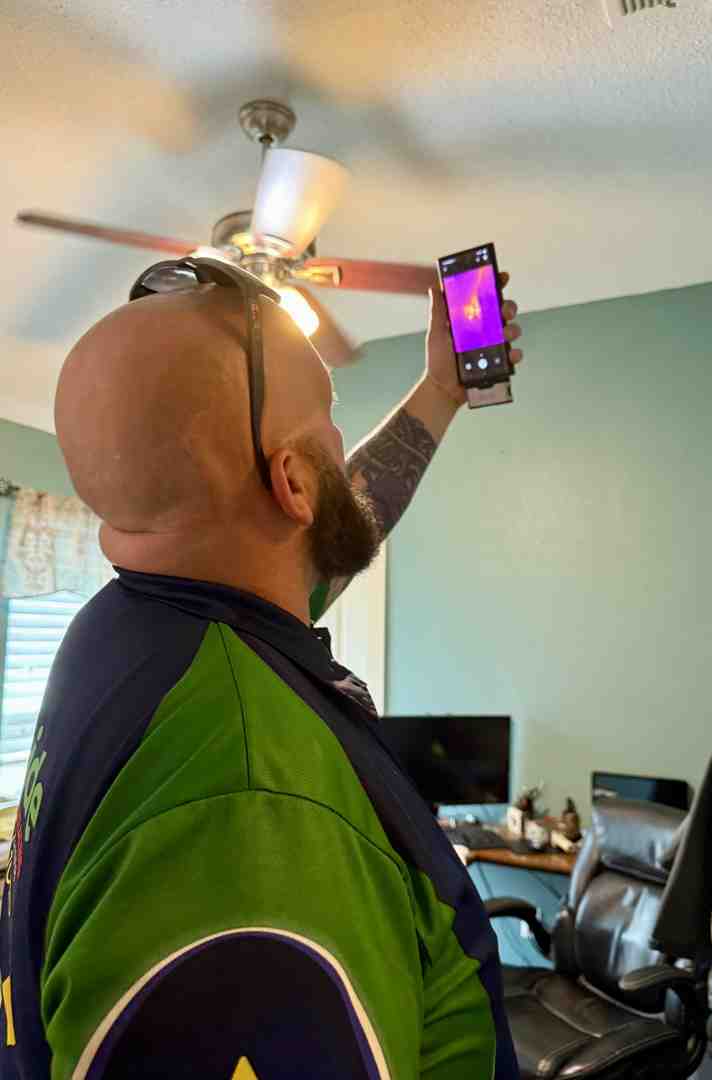
Acoustic sensors are essentially high-powered stethoscopes. We use ground microphones to listen for the "hiss" or "whoosh" of escaping water. Ultrasonic sensors take this a step further by detecting sounds at frequencies far above the range of human hearing. These are incredibly effective for finding leaks in metal pipes, which conduct sound much better than PVC or PEX. If you suspect a leak in your yard or under your driveway, Water Leak Detection Melissa TX services utilize these high-tech listening devices to find the culprit without digging up your entire lawn.
Thermal Imaging and Infrared Technology
Thermal imaging works by detecting infrared radiation—essentially heat. Water has a different "thermal mass" than the materials around it, such as wood studs or concrete slabs. If there is an active leak, the moisture will either be cooler or warmer than the surrounding dry material.
An infrared camera creates a moisture map. We look for temperature differentials (usually a difference of at least 10°F is required for a clear reading) that indicate a plume of water spreading behind a surface. This is one of the most effective ways to handle Water Leak Detection Allen TX, as it allows us to see through walls and floors in real-time.
Pressure-Based and Tracer Gas Detection
Pressure-based systems monitor the equilibrium of your plumbing. If we shut off all fixtures and the pressure in the line still drops, we know there is an opening somewhere. To find that opening, we sometimes use tracer gas detection. We drain the line and fill it with a safe, inert gas mixture (often involving hydrogen, the smallest molecule in the universe). Because the molecules are so small, they can escape through even microscopic cracks and rise to the surface, where we detect them with a "sniffer" probe.
| Method | Best For | Pros | Cons |
|---|---|---|---|
| Acoustic | Pressurized metal pipes | Very accurate for high-pressure leaks | Harder to use on plastic pipes or in noisy areas |
| Thermal | Hidden moisture in walls/slabs | Visual "map" of the damage | Requires a temperature difference; can't see through metal |
| Pressure | Confirming a leak exists | 100% reliable for verifying a breach | Doesn't tell you where the leak is on its own |
| Tracer Gas | Microscopic or slow leaks | Can find leaks that acoustic tools miss | Requires draining the system |
Smart Leak Detection Systems for Residential and Commercial Buildings
As we move further into 2026, smart technology has become a standard in North Texas homes. Smart leak detectors aren't just for finding leaks; they are designed to stop them.
Integration with Smart Home Technology
Smart systems like those we install for Water Leak Detection Plano TX and Water Leak Detection Princeton TX typically use one of two sensor types:
- Mechanical Turbines: These measure the physical spin of water moving through the pipe.
- Ultrasonic Flow Meters: These use sound waves to measure the velocity of the water. Unlike turbines, these have no moving parts and cause zero pressure drop in your home.
These devices connect to your Wi-Fi and send real-time analytics to a smartphone app. If the system detects that water has been running for an unusually long time (like a burst pipe or a stuck toilet flapper), it can automatically close a motorized ball valve to shut off the water to the entire house.
Pros and Cons of Automated Systems
The primary benefit is 24/7 peace of mind. If a pipe bursts while you are at work or on vacation in Water Leak Detection New Hope TX, the system stops the flood in seconds.
However, there are maintenance needs. These systems require a stable internet connection and occasionally need battery replacements for the remote puck sensors placed under sinks or near water heaters. You also need to "train" the system so it doesn't shut off your water just because you decided to take an extra-long shower.
Industrial and Pipeline Leak Detection: Internal vs. External Systems
While residential systems focus on home protection, large-scale pipelines use even more robust versions of how leak detection technology works.
Internally Based Monitoring
Internally based systems use field instrumentation to monitor what is happening inside the pipe.
- SCADA Systems: Supervisory Control and Data Acquisition systems are the most common, though they historically only detect about 19% of leaks.
- RTTM (Real-Time Transient Model): This uses complex math to simulate the flow of the pipeline. If the actual flow doesn't match the model, an alarm triggers.
- Pressure Wave Analysis: When a leak occurs, a negative pressure wave travels in both directions at the speed of sound. Sensors can detect this wave and pinpoint the leak location within 50 meters.
Externally Based Sensing
External systems look for signs of a leak outside the pipe.
- Fiber Optics: A cable is laid alongside the pipe. It can detect the tiny temperature changes or vibrations caused by a leak.
- Vapor Sensing Tubes: These tubes "inhale" air from around the pipe to check for the presence of hydrocarbons or tracer gases.
- Hydrocarbon Sensors: Specifically designed for oil lines, these can detect even a 0.3 mm layer of oil on water in under 30 seconds.
Understanding these industrial concepts is actually vital for homeowners because they explain What is a Slab Leak. A Slab Leak is essentially a "mini-pipeline" leak under your home's foundation. Whether you need help with Slab Leaks Frisco TX or Slab Leaks Melissa TX, the principles of pressure and sound remain the same.
Key Performance Requirements
For any system to be effective, it must meet four criteria:
- Sensitivity: Can it find a small leak?
- Reliability: Does it avoid false alarms?
- Accuracy: Can it tell us exactly where the leak is?
- Robustness: Does it keep working even if a sensor fails?
These requirements are especially critical for Slab Leaks Allen TX, where an inaccurate reading could lead to unnecessary digging.
Validation, Maintenance, and Regulatory Compliance
Simply installing a system isn't enough. To ensure how leak detection technology works for the long haul, regular validation is required.
Testing and Commissioning Procedures
When we install a Water Leak Detection system, we put it through its paces. For Water Leak Detection West Frisco TX, this might include a "wet test" where we use a damp cloth to trigger sensors and verify the alarm reaches the control panel within 10 seconds. We also perform pressure tests to ensure the plumbing is airtight before the system is handed over to the homeowner. For commercial clients in Water Leak Detection Celina TX, we often integrate these alerts directly into the Building Management System (BMS).
Long-Term Maintenance Needs
Technology isn't "set it and forget it." To maintain your Water Leak Detection Prosper TX system:
- Check Batteries: Most wireless sensors last 1-2 years.
- Software Updates: Smart valves often receive firmware updates to improve their leak-detection algorithms.
- Sensor Cleaning: Dust or dirt on a floor sensor can cause a false alarm or prevent it from sensing moisture.
Frequently Asked Questions about Leak Detection
How leak detection technology works for slab leaks?
Slab leaks occur beneath the concrete foundation of your home. We find them using electronic sensors and ground microphones. By "listening" through the concrete, we can hear the specific frequency of water spraying against the soil. We also use thermal imaging to find "hot spots" on the floor if the leak is in a hot water line. This is a common service for Slab Leaks Plano TX and Slab Leaks Prosper TX.
How leak detection technology works with smart home apps?
The hardware (the sensor or flow meter) sends data to a cloud server via your home Wi-Fi. The cloud server processes the flow patterns using algorithms. If it sees something abnormal—like a constant flow of 2 gallons per minute for two hours—it sends a push notification to your phone. In Slab Leaks Celina TX, many homeowners use these apps to monitor their vacation properties remotely.
Can leak detection systems prevent mold growth?
Yes! Mold needs moisture to grow, and it can start in as little as 24-48 hours. By identifying a pinhole leak behind a wall immediately, you can stop the moisture source before the mold has a chance to take root. This is a major benefit for residents dealing with Slab Leaks West Frisco TX, where humidity can already be a challenge.
Conclusion
At Burnside Air Conditioning & Heating & Plumbing, we’ve been the trusted experts in McKinney, TX, and throughout Collin County since 1958. We know that a hidden leak is more than just a nuisance—it’s a threat to your home’s structural integrity and your family’s comfort. That’s why we apply our "Gold Star Standard" to every job, using the latest non-invasive technology to find and fix leaks fast.
Whether you are in Plano, Frisco, or Celina, don't wait for a high water bill or a damp spot on the floor to take action. Schedule professional leak detection services today and let our family take care of yours.
Other Blog Posts
Latest Blogs
Customer Testimonial
Hear What Our Customers Say About Their Burnside Experience


I usually don’t leave reviews but Burnside AC really impressed me both times I’ve used them. They were honest and affordable, and they worked around my schedule without any problem. Every technician I met was pleasant, professional, and willing to go above and beyond to make sure everything was done right. It’s rare to find a company you can truly trust, and I highly recommend them.
Jason was excellent. Extremely knowledgeable and very professional. I am really happy with the service he provided, as well as conversing with him personally. I highly recommend him and Burnside. Will definitely be referring Jason and Burnside to family and friends in need of service. Thanks again, Jason!
Thank you Burnside for your great customer service and excellent maintenance team! H.B. completed our fall checkup today in a timely manner and was very friendly and professional. Appreciate you all!
"We have used Burnside for nearly 30 years. They have always been prompt, polite, and professional. Our latest request was a disconnect. You can be sure Burnside's phone will ring as soon as new service is required!"
"I am so impressed with Burnside!!! I will never even consider using anyone else. I was u def a lot of pressure and the heating system was not working correctly and they found a minor inexpensive solution. Another local vendor charged way more for a similar situation. I immediately sighed up for their annual program. God bless them."
"I had Burnside install a new A/C system a few years ago. They did a great job and have returned on a few occasions to perform maintenance. Their technicians are well trained, knowledgeable and courteous. I would highly recommend them for your A/C and heating needs!"
"This crew who installed both of our HCAC units were very good. They worked hard for over 8 hours so we did not have to worry about getting uncomfortable with both units down. Would recommend Burnside to family and friends."
"Excellent inspection and service by Jacob McCormick. He was very efficient, personable and professional. We would like to request him for our future inspections. A first class job!"
"I cannot praise Tim enough for coming to our rescue! We were having issues with rooms over heating and getting too cold, and he was at our house with quickness to resolve the issue!"
.webp)