


Air Conditioner
No Ducts? No Problem! How to Cool Your Century Home

Why Adding Cooling Without Ductwork Options Compared Matters for North Texas Homeowners
Adding cooling without ductwork options compared is something thousands of North Texas homeowners face every summer — especially those living in older McKinney and Collin County homes built long before central air conditioning became standard.
Here are the main options available in 2026:
| Option | Best For | Efficiency (SEER) | Lifespan |
|---|---|---|---|
| Ductless Mini-Split | Whole-home or zoned cooling | 16–28+ | 15–20 years |
| Window AC Unit | Single rooms, temporary use | 10–15 | 10–12 years |
| Portable AC Unit | Renters, short-term needs | 8–12 | 7–10 years |
| High-Velocity System | Historic homes, aesthetics | 14–18 | 15–20 years |
| Through-the-Wall (PTAC) | Garages, sunrooms, additions | 12–16 | 10–15 years |
The bottom line: For most homes without ductwork, ductless mini-split systems offer the best combination of efficiency, comfort, and longevity. Window and portable units work for temporary or budget situations, but they come with real trade-offs in noise, energy use, and home security.
Older homes in McKinney have a lot going for them — original woodwork, plaster walls, and the kind of craftsmanship you just don't see in new construction. What they often don't have is ductwork. And come July in North Texas, that becomes a serious problem.
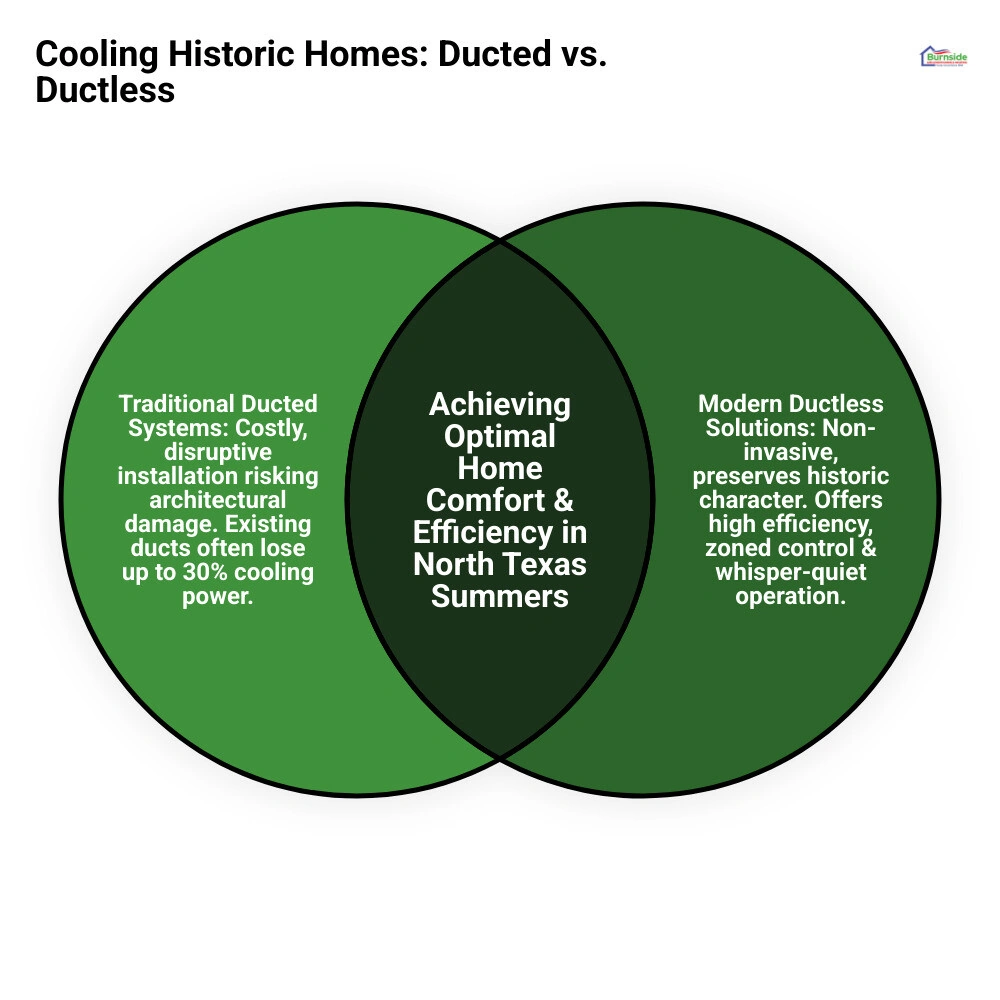
Running traditional ductwork through a century-old home means tearing into walls, ceilings, and floors. It's expensive, disruptive, and can damage the architectural character you've worked hard to preserve. On top of that, even homes that do have ductwork can lose up to 30% of their cooling power through leaks and gaps — meaning ducts aren't always the answer even when they exist.
The good news is that modern ductless technology has matured significantly. Today's options range from whisper-quiet mini-splits to high-velocity small-duct systems designed specifically for older homes. Each has its place, and understanding the differences can save you money and a lot of summer discomfort.
Primary Options for Duct-Free Comfort in North Texas
When we look at adding cooling without ductwork options compared, we usually categorize them by how permanent and efficient they are. In North Texas, where summer temperatures regularly push past 100°F, the "strength" of the system matters just as much as how it looks.
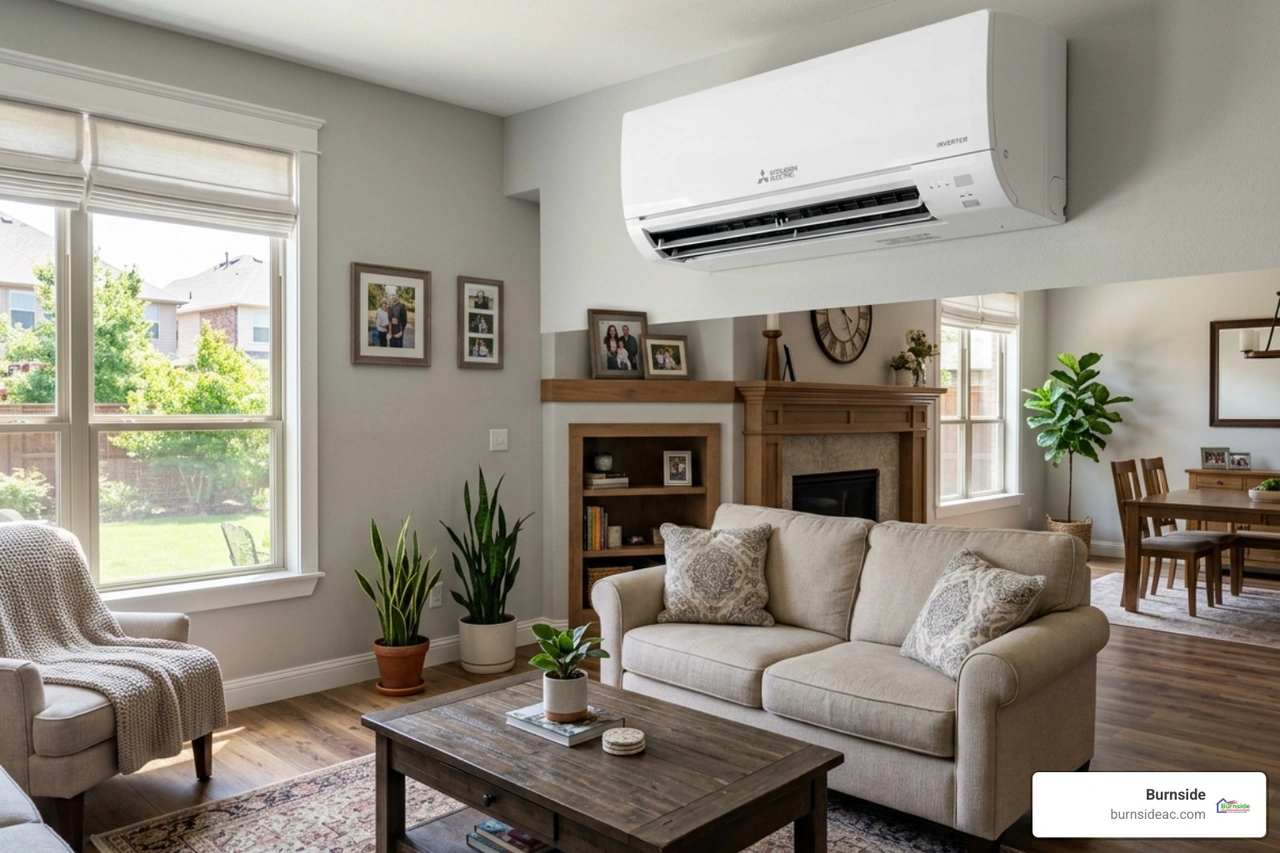
For a deeper dive into the most popular permanent solution, check out our Ductless Mini Split Systems Complete Guide.
Adding cooling without ductwork options compared: Mini-splits vs. Window Units
Window units have been the "band-aid" fix for decades. They are cheap to buy at a big-box store in Plano or Frisco, but the hidden costs are high. First, there is the security risk; a window unit provides an easy entry point for intruders. Second, they block your natural light and fresh air.
In contrast, a mini-split system only requires a tiny three-inch hole in the exterior wall. This preserves your home's security and keeps your windows free. Furthermore, while a window unit might roar at 50 to 60 decibels (roughly the volume of a vacuum cleaner), a mini-split indoor unit typically runs at 19 to 32 decibels — which is quieter than a whisper. If you are trying to sleep during a humid July night in McKinney, that noise difference is life-changing. You can read more in our Mini Split vs Window Unit Comparison.
Adding cooling without ductwork options compared: Portable AC vs. PTAC
Portable air conditioners are often a choice of last resort. They take up floor space and rely on a large hose to vent heat out of a window. A major flaw with single-hose portable models is that they create "negative pressure." As they blow hot air out, they actually pull hot, humid North Texas air in through cracks around your doors and windows, reducing their effective cooling power by up to 40%.
PTAC units (Packaged Terminal Air Conditioners) are the through-the-wall systems you often see in hotels. They are more permanent than a portable unit and don't require ductwork, but they require cutting a large, rectangular hole through your home’s exterior wall. For a historic Craftsman or Victorian home, this is often a dealbreaker for the sake of curb appeal. Deciding between these requires weighing how much you want to modify your home's structure. See our guide on How to Choose Between Duct & Ductless AC Systems for more details.
Why Ductless Mini-Splits are the Gold Standard in 2026
As we move through 2026, ductless mini-splits have emerged as the premier choice for Collin County homeowners. They aren't just an alternative to central air; in many ways, they are superior to it.
The secret lies in inverter technology. Traditional central AC systems are either 100% "on" or 100% "off." This leads to uncomfortable temperature swings. Modern mini-splits work more like a car’s cruise control. They ramp up or down to meet the exact cooling demand of the room. This variable-speed operation is why some models boast SEER2 ratings as high as 35, while even high-end central AC usually caps out around 26.
| Feature | Ductless Mini-Split | Window Unit | Portable AC |
|---|---|---|---|
| Noise Level | 19–32 dB (Whisper) | 50–60 dB (Loud) | 52–60 dB (Very Loud) |
| Efficiency | Up to 35 SEER2 | 10–15 SEER | 8–12 SEER |
| Lifespan | 15–20+ Years | 10–12 Years | 7–10 Years |
| Installation | Professional (1-2 days) | DIY (30 mins) | DIY (15 mins) |
Superior Dehumidification and Air Quality
Texas humidity is no joke. One of the greatest Benefits of Ductless Air Conditioners is their ability to manage moisture. Because the inverter-driven compressor can run at very low speeds for long periods, it spends more time extracting humidity from the air than a standard unit that cycles on and off quickly.
Additionally, ductless systems avoid the dust and allergen buildup common in old, dirty ducts. Most units feature multi-stage filtration that can capture up to 99.9% of allergens, providing a significant boost to your indoor air quality — a major plus for families in Melissa or Anna dealing with seasonal allergies.
Zoned Comfort for Multi-Story Houses
If you live in a two-story home in Celina or Prosper, you know the struggle: the downstairs is freezing while the upstairs bedrooms feel like a sauna. Ductless systems solve this through zoning.
A single outdoor condenser can power up to eight indoor air handlers. This means you can set your master bedroom to 68°F for sleeping while keeping the guest room or home office at 76°F to save energy. This precision can drop your energy bills by 20% to 40% compared to trying to cool the whole house with one thermostat. Learn more about Mini Split Zoning in McKinney to see how it fits your layout.
Maximizing Efficiency in Older Collin County Homes
Adding a high-tech cooling system is only half the battle. In older homes — especially those built before 1940 — the "envelope" of the house is often leaky. Research shows that pre-1940 homes use roughly 40% more energy per square foot than homes built after 2000.
Before we install any system, we prioritize a Manual J load calculation. This isn't just "eyeballing" the room size. It accounts for your insulation levels, the type of windows you have, and even which direction your house faces. An oversized unit is just as bad as an undersized one; it will "short cycle," turning on and off so fast that it never has a chance to remove the humidity, leaving you feeling clammy.
Improving your attic insulation and sealing air leaks around old windows can reduce your cooling costs by another 15% to 30%. This allows us to install a smaller, less expensive unit that performs better. Explore the Benefits of a Home Ductless AC to see how these factors work together.
Federal Incentives and Local Rebates
The transition to energy-efficient cooling is more affordable than ever in 2026. Under the Inflation Reduction Act, the Section 25C federal tax credit allows homeowners to claim 30% of the equipment and installation costs for qualifying high-efficiency heat pumps, up to a maximum of $2,000 per year.
When you combine these federal credits with local utility rebates available in many parts of Collin County, the long-term ROI of a mini-split system becomes very attractive. While the upfront cost is higher than a window unit, the energy savings and increased home value make it the smarter financial move. We weigh these factors in our look at The Pros and Cons of Mini Split HVAC Systems.
Frequently Asked Questions about Adding Cooling Without Ductwork Options Compared
Can a ductless system cool my entire McKinney home?
Absolutely. While many people think of mini-splits for a single room addition or a garage conversion, "multi-zone" systems are designed for whole-home comfort. We can network multiple indoor air handlers to a single outdoor condenser to cover every floor of your home. This provides a level of customized control that even the best central AC systems can't match. For a head-to-head breakdown, see our Central AC vs Ductless Mini Split Comparison.
Are ductless units quieter than window air conditioners?
Yes, by a massive margin. Because the noisy part of the system — the compressor — sits outside your home, the indoor unit is virtually silent. Most of our customers in Allen and Plano tell us they have to check the lights on the unit to even tell if it's running. At 19 decibels, it is literally quieter than the sound of rustling leaves.
What are the maintenance requirements for ductless systems?
Ductless systems are easy to maintain, but they do require consistency. We recommend:
- Filter Cleaning: Most units have washable filters that should be rinsed every 4 to 6 weeks during the peak of the North Texas summer.
- Outdoor Clearance: Keep leaves, debris, and "Texas snow" (cottonwood seeds) away from the outdoor unit to ensure proper airflow.
- Annual Tune-ups: Once a year, have a professional check the refrigerant levels, clear the condensate drains, and verify all electrical connections to ensure the system lasts its full 20-year lifespan.
Conclusion
At Burnside Air Conditioning & Heating, we’ve been helping McKinney and Collin County families stay comfortable since 1958. We understand that your home is your biggest investment and often a piece of local history. You shouldn't have to choose between preserving that character and surviving a Texas summer.
Whether you are in a historic bungalow in McKinney or a newer home with a "hot room" in Prosper, we apply our "Gold Star Standard" to every diagnostic and installation. We specialize in non-invasive, high-efficiency solutions that bring modern comfort to any space, regardless of its age or layout.
Ready to reclaim your home from the heat? Schedule your consultation for a Mini Split system today and let us help you find the perfect duct-free solution for your lifestyle.
Other Blog Posts
Latest Blogs
Customer Testimonial
Hear What Our Customers Say About Their Burnside Experience


I usually don’t leave reviews but Burnside AC really impressed me both times I’ve used them. They were honest and affordable, and they worked around my schedule without any problem. Every technician I met was pleasant, professional, and willing to go above and beyond to make sure everything was done right. It’s rare to find a company you can truly trust, and I highly recommend them.
Jason was excellent. Extremely knowledgeable and very professional. I am really happy with the service he provided, as well as conversing with him personally. I highly recommend him and Burnside. Will definitely be referring Jason and Burnside to family and friends in need of service. Thanks again, Jason!
Thank you Burnside for your great customer service and excellent maintenance team! H.B. completed our fall checkup today in a timely manner and was very friendly and professional. Appreciate you all!
"We have used Burnside for nearly 30 years. They have always been prompt, polite, and professional. Our latest request was a disconnect. You can be sure Burnside's phone will ring as soon as new service is required!"
"I am so impressed with Burnside!!! I will never even consider using anyone else. I was u def a lot of pressure and the heating system was not working correctly and they found a minor inexpensive solution. Another local vendor charged way more for a similar situation. I immediately sighed up for their annual program. God bless them."
"I had Burnside install a new A/C system a few years ago. They did a great job and have returned on a few occasions to perform maintenance. Their technicians are well trained, knowledgeable and courteous. I would highly recommend them for your A/C and heating needs!"
"This crew who installed both of our HCAC units were very good. They worked hard for over 8 hours so we did not have to worry about getting uncomfortable with both units down. Would recommend Burnside to family and friends."
"Excellent inspection and service by Jacob McCormick. He was very efficient, personable and professional. We would like to request him for our future inspections. A first class job!"
"I cannot praise Tim enough for coming to our rescue! We were having issues with rooms over heating and getting too cold, and he was at our house with quickness to resolve the issue!"
.webp)