
Beginner's Guide to Pet Filter Change Frequency
Burnside Air Conditioning, Heating & Plumbing

If you have pets, the standard 90-day filter rule can leave your HVAC system struggling weeks too soon. Learn how dogs and cats change how often you should replace your air filter — and the right schedule for your home.
Why Pets Change How Often You Should Replace Your Home's Air Filter
How pets affect how often you change your filter is something most homeowners in McKinney, TX don't think about until their energy bills climb or someone in the house starts sneezing more than usual. The standard advice says to replace your HVAC air filter every 90 days — but if you share your home with a dog, cat, or other pet, that schedule can leave your system working harder than it should weeks before you ever check the filter.
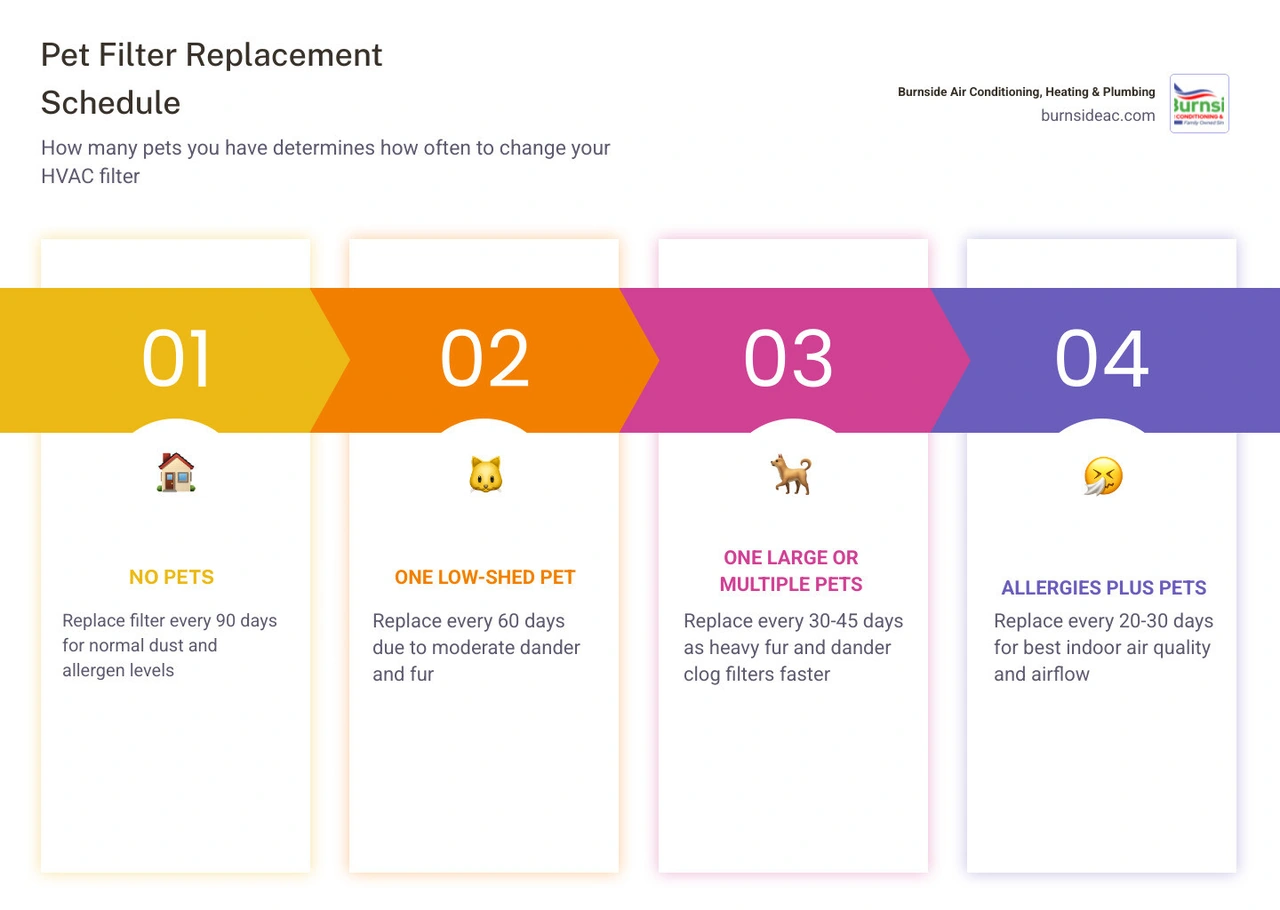
Here's a quick answer based on your situation:
| Household Type | Recommended Filter Change Frequency |
|---|---|
| No pets | Every 90 days |
| One small or low-shedding pet | Every 60 days |
| One large dog or multiple pets | Every 30–45 days |
| Multiple large or heavy-shedding pets | Every 30 days |
| Pets plus allergy or asthma sufferers | Every 20–30 days |
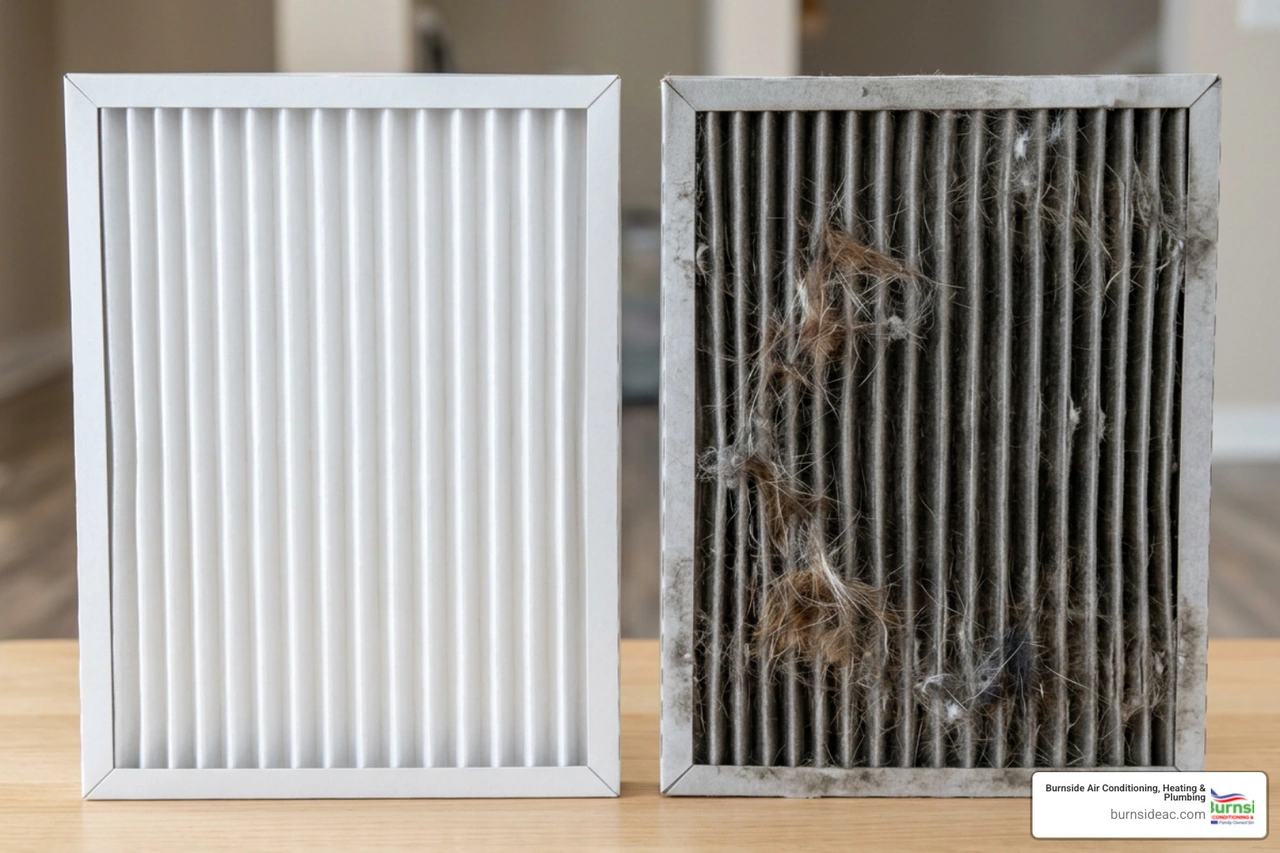
The reason pets shorten filter life so dramatically comes down to particle load. Pets shed fur that mats across filter pleats, and they release dander — tiny skin particles measuring just 2.5 to 10 microns — that embed deep into filter fibers and restrict airflow long before the filter looks visibly dirty. On top of that, outdoor pets carry pollen, dust, and debris inside every time they come through the door, adding even more strain on your system.
Research shows that a clogged filter can increase your HVAC system's energy consumption by 5 to 15%, while simply replacing a dirty filter can improve indoor air quality by 20 to 30%. In a pet household, those numbers matter more — and they add up faster than most homeowners expect.
This guide walks you through everything you need to know: how breed and size affect your schedule, what seasonal shedding does to your filter, which MERV rating works best for pet homes, and the simple habits that can extend your filter's life between changes.
Terms related to how pets affect how often you change your filter:
- best air filter replacement schedule for texas
- does filter type affect how often to replace it
- how often should you change your hvac air filter
How Pets Affect How Often You Change Your Filter
To truly understand how pets affect how often you change your filter, we have to look at the invisible physical processes occurring inside your North Texas home. When an air conditioning and heating system runs, it pulls air from your living spaces through return vents, passes it through the filter to catch airborne contaminants, conditions it, and pushes it back out.
When you introduce pets into this cycle, the overall particle load in your indoor air spikes dramatically. This isn't just about the visible clumps of fur drifting across your hardwood floors. The real culprit is pet dander—microscopic skin cells that animals naturally shed throughout the day.
Because pet dander particles are incredibly small (measuring between 2.5 and 10 microns), they behave differently than standard household dust. While heavy dust settles quickly onto flat surfaces, lightweight dander can remain suspended in the air for hours. As your HVAC blower motor runs, it pulls these tiny particles into the return ducts.
Once inside, dander embeds itself deep within the microscopic spaces of your filter's media. Unlike larger pet hair, which tends to blanket the surface of the filter, dander fills the internal pores. This creates a dense, restrictive barrier that blocks airflow.
Additionally, pets produce saliva proteins that dry on their fur and flake off into the air, adding another layer of fine particulate matter. When these proteins and dander combine with the natural oils on pet hair, they create a sticky mixture that binds dust particles together on the filter surface. This accelerates clogging and can lead to signs your AC filter needs immediate attention in McKinney, such as musty odors, dusty registers, and uneven temperatures throughout your home.
Understanding How Pets Affect How Often You Change Your Filter by Breed and Size
Not all pets impact your HVAC system in the exact same way. The specific breed, coat type, and physical size of your animals play a massive role in determining your ideal replacement schedule.
- Heavy Shedders vs. Low-Shed Breeds: If you own a double-coated breed like a Siberian Husky, German Shepherd, or Golden Retriever, your filter faces a constant onslaught of heavy undercoat fur. These breeds can easily coat a standard 1-inch filter in a matter of weeks, especially during peak shedding periods. On the other hand, low-shedding or hypoallergenic dogs like Poodles or Maltese release very little visible hair. However, it is a common misconception that hypoallergenic pets don't affect filters. They still shed dander and saliva proteins, meaning their impact is less visible but still requires a shorter replacement window than a pet-free home.
- The Cat Factor: Cats are meticulous groomers, but their grooming process actually increases the allergen load in your air. When cats lick themselves, they coat their fur in saliva proteins. Once dry, these proteins flake off along with exceptionally fine dander. Cat dander is smaller and stickier than dog dander, meaning it bypasses coarser filters and embeds itself deeper into high-efficiency filter pleats.
- Pet Size and Quantity: A 100-pound Great Dane naturally generates far more dander, hair, and tracked-in outdoor dirt than a 10-pound Chihuahua. If you have multiple pets, the particle load compounds. In a home with three or more animals, the cumulative dander can load an air filter to maximum capacity in as little as 20 to 30 days.
How Pets Affect How Often You Change Your Filter During Seasonal Shedding Cycles
Your filter replacement schedule shouldn't remain static throughout the year. In North Texas, our weather patterns directly influence animal behavior and coat cycles, which in turn dictates how often you need to swap out your filter.
During the spring, pets undergo a process often called "blowing coat." As temperatures rise, animals shed their heavy winter undercoats to prepare for the hot Texas summer. This sudden release of fur can triple the amount of debris entering your ventilation system. If you aren't checking your filter weekly during this time, you may find your system struggling against a thick mat of hair before the spring season even ends. For a deep dive into managing your system during this transition, refer to our spring air filter replacement guide 2026.
Conversely, the fall brings a secondary shedding cycle as pets lose their summer coats to make room for denser winter fur. Once winter arrives and the cold weather sets in across McKinney, Frisco, and Plano, we tend to keep our doors and windows tightly shut. This sealing of the home traps pet dander, hair, and odors indoors. Because your heating system runs frequently to keep you warm, it constantly recirculates these trapped particles, causing filters to clog much faster in the winter than they would in the mild shoulder months.
Recommended Replacement Schedules for Texas Pet Owners
Living in North Texas presents unique environmental challenges that interact with pet ownership. High humidity, seasonal pollen spikes, and dusty winds in communities like Celina, Prosper, and Melissa mean our HVAC systems already work hard. When you layer the impact of pets on top of these regional factors, maintaining a strict filter replacement schedule becomes essential to protecting your home's comfort and your system's longevity.
To help you visualize how different variables interact, we have put together a comprehensive breakdown of recommended replacement intervals based on real-world testing in pet-friendly households.
Recommended Replacement Intervals by Filter Thickness and Pet Count
| Filter Thickness | No Pets | 1 Pet (Low/Med Shed) | 1 Pet (Heavy Shed) or 2 Pets | 3+ Pets or Pets + Allergies |
|---|---|---|---|---|
| 1-Inch Filter | 60–90 Days | 45–60 Days | 30–45 Days | 20–30 Days |
| 2-Inch Filter | 90 Days | 60 Days | 45 Days | 30 Days |
| 4-Inch Media | 6–9 Months | 4–6 Months | 3–4 Months | 2–3 Months |
| 5-Inch Media | 9–12 Months | 6–9 Months | 4–6 Months | 3 Months |
If anyone in your home suffers from asthma, seasonal allergies, or sensitivity to pet dander, you should automatically default to the most aggressive replacement schedule in the table above. When a filter becomes fully loaded, it loses its ability to capture fine particles, allowing allergens to continuously recirculate through your bedrooms and living spaces.
For more localized advice on managing these intervals throughout our hot summers and chilly winters, check out our guide on the best air filter replacement schedule for texas.
Proactive Steps to Extend Filter Life
While you cannot stop your pets from shedding, you can take proactive steps to reduce the volume of hair and dander that reaches your return vents. Implementing a few simple "source control" habits can extend your filter's lifespan by 30% to 50% and keep your indoor air noticeably cleaner.
- Establish an Outdoor Grooming Routine: Brushing your pets regularly is the single most effective way to protect your HVAC system. Whenever possible, brush your dogs or cats outdoors. This ensures that loose undercoat hair drifts away into the yard rather than settling into your carpets and return vents. For heavy-shedding breeds, using a specialized deshedding tool during the spring and fall coat transitions can capture thousands of loose hairs before they ever have a chance to become airborne.
- Invest in a HEPA-Equipped Vacuum: Standard vacuum cleaners often kick fine dander and dust back into the air through their exhaust ports, where your HVAC system promptly sucks them up. Using a vacuum equipped with a true HEPA filter ensures that microscopic pet allergens remain trapped inside the vacuum canister. Vacuum high-traffic pet areas at least twice a week to keep surface debris from migrating into your ductwork.
- Wipe Paws at the Door: Keep a towel or pet-safe wipes by the back door. Wiping your pet's paws and coat after walks or outdoor playtime limits the amount of North Texas clay, dust, and pollen they track into your home.
- Regular HVAC Maintenance: Keeping your system clean overall reduces the strain on your filter. Knowing how often should you service your hvac system is key; scheduling professional bi-annual maintenance ensures your coils, blower motor, and ductwork remain clear of pet hair buildup. If you are ready to swap out your current filter or need assistance selecting the perfect fit, you can learn more about changing your air filter in mckinney to keep your system running at peak performance.
Choosing the Right MERV Rating and Filter Type
When shopping for replacement filters in Allen, McKinney, or Plano, you will quickly notice a wide variety of options, materials, and ratings. Selecting the correct filter type is a balancing act between capturing pet dander and maintaining healthy airflow through your system. For a comprehensive look at your options, explore our guide on AC filter selection in McKinney.
Understanding Filter Materials and Styles
- Fiberglass Filters: These are the cheap, spun-glass filters often sold in multi-packs. While they are inexpensive, they are highly ineffective for pet owners. Fiberglass filters are designed solely to catch large dust bunnies to protect the HVAC equipment; they allow microscopic pet dander, saliva proteins, and fine hair to pass right through, leaving your indoor air quality virtually unimproved.
- Pleated Paper/Synthetic Filters: Pleated filters are the gold standard for pet-friendly homes. The folded design vastly increases the surface area of the filter media, allowing it to capture high volumes of pet hair and fine dander without immediately restricting airflow.
- Filter Thickness: Standard systems use 1-inch filters, but some homes are equipped with media cabinets designed for 2-inch, 4-inch, or 5-inch filters. Thicker filters contain significantly more media material, allowing them to hold much more pet debris and last months longer than 1-inch alternatives.
The Airflow Trade-Off with High-MERV Filters
MERV stands for Minimum Efficiency Reporting Value, and it scales from 1 to 16 for residential systems. The higher the MERV rating, the smaller the particles the filter can trap. However, high-efficiency filtration comes with a physical trade-off: tighter filter fibers create more resistance to airflow.
- MERV 8: This is the baseline recommendation for general home use. It easily captures pet hair and larger dust particles, but it will let a significant amount of microscopic pet dander slip through.
- MERV 11: This is the "sweet spot" for the vast majority of pet-owning households. A MERV 11 filter captures up to 85% of airborne pet dander and fine particles, providing excellent indoor air quality relief without placing excessive strain on your heating and cooling system.
- MERV 13: Highly recommended for homes with multiple pets or severe allergy sufferers. It traps up to 90% of dander, bacteria, and smoke particles. However, because the weave is so tight, a MERV 13 filter will clog quickly in a pet home and must be inspected every 20 to 30 days to prevent system issues.
Using a filter with a MERV rating that is too high—or leaving a dirty high-MERV filter in place too long—can lead to severe blower motor strain, frozen evaporator coils, and increased energy consumption. It is vital to ensure your system is compatible with the filter you choose. For details on matching filter performance to your specific equipment, consult our resource on correct filter sizing for McKinney HVAC systems.
Frequently Asked Questions about Pet Filter Maintenance
How do I know if my air filter is clogged with pet dander?
Because pet dander is microscopic, a filter can be completely choked with allergens even if it doesn't look covered in a thick blanket of fur. To determine if your filter is overdue for a change, look for these common air filter warning signs for HVAC in McKinney:
- The Light Test: Remove your air filter and hold it up to a bright light source (like a lamp or the sun). If you cannot see light passing clearly through the pleats, the filter is fully loaded with fine dander and dust and must be replaced immediately.
- Gray Discoloration: A fresh filter is bright white. If your filter has turned a dull gray or blackish color, it is saturated with dirt and pet debris.
- Weak Airflow: Feel the air coming out of your supply registers. If the airflow feels weak or the air coming out feels warm during the cooling season, a clogged filter is likely restricting the system's breathing.
- Increased Dust and Odors: If you notice a persistent layer of dust settling on your furniture shortly after cleaning, or if you smell a stale, musty "dirty dog" odor when the AC turns on, your filter is no longer doing its job.
Can I vacuum a disposable filter to make it last longer?
No. You should never attempt to vacuum, wash, or blow compressed air through a disposable pleated air filter.
While vacuuming the surface might remove some visible pet hair, it does nothing to clear the microscopic dander embedded deep within the synthetic fibers. Furthermore, the suction from a vacuum cleaner can tear or stretch the delicate filter media, creating larger holes that allow dust and allergens to pass directly into your HVAC system. Finally, vacuuming a dirty filter releases millions of trapped allergens, dander particles, and mold spores back into your indoor air, defeating the purpose of having a filter in the first place.
Does a thicker filter always last longer in homes with pets?
Generally, yes. A thicker filter (such as a 4-inch or 5-inch media filter) provides a much larger surface area than a standard 1-inch filter. This extra depth allows the filter to distribute the captured pet hair and dander across a wider volume of material, preventing rapid clogging and maintaining healthy airflow for a longer period.
However, a thicker filter is only an option if your HVAC system's return plenum was specifically designed or retrofitted with a media cabinet to accommodate it. You should never attempt to force a thicker filter into a narrow slot designed for a 1-inch filter. For more information on how depth affects lifespan and performance, check out our guide on how often to replace your air filter.
Conclusion
Managing how pets affect how often you change your filter is one of the simplest yet most impactful ways to protect your home's indoor comfort and your wallet. By staying on top of your replacement schedule, you prevent unnecessary wear and tear on your blower motor, avoid costly emergency repairs, and keep your monthly energy bills under control.
Beyond system efficiency, regular filter changes are a cornerstone of green living. When your heating and cooling system doesn't have to fight against a clogged, hair-matted filter, it uses less electricity, helping you reduce your carbon footprint. You can learn more about how your air filter can help you go green while keeping your family comfortable.
At Burnside Air Conditioning, Heating & Plumbing, we have been serving families and their furry friends across McKinney, Frisco, Allen, Prosper, and the surrounding communities since 1958. We understand the unique heating, cooling, and indoor air quality challenges that North Texas pet owners face. If you want to ensure your home's air remains clean, fresh, and healthy all year long, schedule professional indoor air quality and filter replacement services with Burnside AC & Heating today!
Need Help?
Contact us today to discuss your needs. Our team is ready to help.
About the Author
Burnside Air Conditioning, Heating & Plumbing
More Articles
View All PostsRelated Articles

How Long Should a Typical Furnace Repair Service Take?
Waking up to a freezing house is stressful enough without guessing when your heat will return. We break down the exact timeline between diagnosing the issue and fixing your furnace.
Read Article
The Impact of Clogged Burners on Furnace Efficiency and Safety
Rust and debris can silently block your heating system's gas flow, creating hidden hazards. Learn to spot the signs of incomplete combustion early to protect your home.
Read Article
Why Tankless Water Heaters Need Specific Freeze Protection in Texas
Exterior-mounted tankless units are highly vulnerable to sudden Texas cold snaps. Understand the risks to your isolation valves and why professional winterization is the safest choice for your home.
Read Article
Navigating Gas Line Safety Inspections for Furnace Replacements in Prosper, TX
Replacing a failing heating system shouldn't mean drowning in municipal red tape. Discover what to expect during your mandatory town safety inspection.
Read Article
Programmable Thermostat Upgrades: Wi-Fi Connected vs. Local Control Only
Deciding between a high-tech smart thermostat and a reliable standard model can be confusing. We break down the pros and cons so you can confidently choose the right upgrade.
Read Article
Diagnosing a Clicking Sound Before the Furnace Ignites
When you turn on the heat during the first cold snap, rapid clicking from the HVAC closet can be startling. Find out if it's a normal spark igniter or a sign you need repairs.
Read Article
How Short Cycling Damages Your Furnace Blower Over Time
If your heating system constantly shuts down after just a few minutes, it's causing invisible mechanical wear. We break down why these short run cycles threaten your blower motor.
Read Article
Heating Solutions for Historic Homes in Downtown McKinney, TX
Upgrading the heat in your century-old property shouldn't mean tearing down original plaster. Discover non-invasive HVAC options that deliver modern comfort while preserving architectural charm.
Read Article
Tackling October Indoor Air Quality Challenges as Windows Stay Closed
When you shut your windows for the season, indoor VOCs and odors get trapped inside. Transitioning to active HVAC air management is the key to keeping your home fresh.
Read Article
Humidifier Integration: Bypass vs. Fan-Powered Systems for Dry Texas Winters
When Texas winters dry out your home, choosing between a bypass and a fan-powered humidifier is a critical decision. See how your specific HVAC layout dictates the right system.
Read Article
Does My Heat Pump Need a Defrost Cycle Check Before Winter?
Your heat pump has a hidden vulnerability when temperatures plummet. A proactive defrost cycle check in October is the best way to avoid a total freeze-up in January.
Read Article
How We Detect Microscopic Gas Leaks Around Your Furnace Manifold
Winter cold snaps put immense stress on heating systems, causing dangerous pinhole fissures. See why relying on your nose isn't enough and how our tools keep your family safe.
Read ArticleReady to Get Started?
Whether you need a repair, maintenance, or a new installation, our expert team is here to help.