Risks of Skipping HVAC Maintenance
Burnside Air Conditioning, Heating & Plumbing

Skipping HVAC maintenance quietly drives up energy bills, invites breakdowns, and shortens your system's life. Here's what North Texas homeowners really risk — and how routine care prevents it.
What Happens If You Skip HVAC Maintenance: The Risks Every North Texas Homeowner Should Know
What happens if you skip HVAC maintenance is a question most McKinney homeowners only ask after something has already gone wrong — usually on the hottest afternoon in July or the coldest night in January. By then, the damage is done.
Here is a quick summary of what you risk when HVAC maintenance gets skipped:
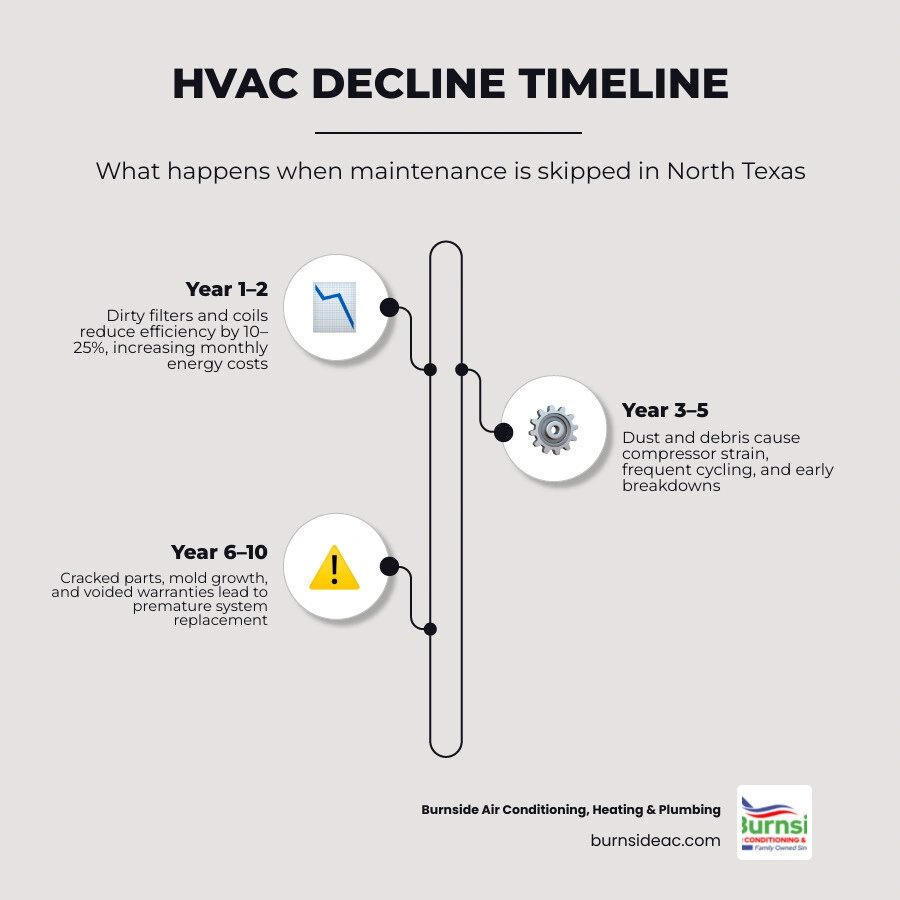
- Higher energy bills — dirty filters and coils force your system to work harder, raising energy use by 10–25%
- More frequent breakdowns — over 80% of summer emergency AC calls are for problems that routine maintenance would have caught
- Shorter system lifespan — a neglected system may last only 8–10 years instead of 15–20
- Poor indoor air quality — dust, mold, and allergens build up without regular cleaning
- Safety hazards — a cracked heat exchanger can leak carbon monoxide into your home
- Voided manufacturer warranty — most warranties require documented annual professional service
- Premature system replacement — 40% of HVAC replacements happen earlier than necessary due to skipped maintenance
North Texas summers are brutal and winters can surprise you. Your HVAC system carries a heavy load year-round in Collin County, and skipping maintenance does not save money — it just delays a much larger bill. The decline is slow and quiet at first, but it compounds quickly. By the time you notice something is wrong, the system has often been struggling for months.
What happens if you skip hvac maintenance terms explained:
- benefits of regular hvac maintenance
- how often should you service your hvac system
- what does an hvac maintenance visit include
The Financial Toll: How Neglect Drives Up Energy Bills and Wear
When you ignore your heating and cooling system, the first penalty you pay isn't a sudden breakdown. Instead, it is a quiet, monthly tax that shows up directly on your utility bills.
An unmaintained air conditioner loses roughly 5% of its operating efficiency every single year it goes without professional service. This efficiency loss occurs because your system is constantly fighting against two primary enemies: dirt and friction.
Over months of operation in dusty North Texas environments, a thick layer of microscopic grime coats your system's indoor and outdoor coils. Dirty coils act as an insulator, blocking the essential heat transfer process.
Instead of easily absorbing heat from your indoor air and releasing it outside, your air conditioner has to run longer and work harder to achieve the temperature set on your thermostat.
This restricted airflow, combined with dirty filters and coils, can raise your HVAC energy consumption by 10% to 25% completely unnoticed. Your system runs longer cycles, consumes more electricity, and drives up your monthly expenses.
To understand the full scope of these long-term financial impacts, read more about the Consequences of Not Maintaining Your HVAC.
What happens if you skip HVAC maintenance on your air conditioner?
During our scorching summers in McKinney, Frisco, and Plano, your air conditioner is under immense pressure. If you skip seasonal maintenance, the physical toll on the system's cooling components can be catastrophic.
One of the most common consequences of neglect is a frozen evaporator coil. When airflow is restricted by a clogged air filter or dust-coated coil, the temperature of the refrigerant inside the coil drops below freezing.
Moisture in the air condenses on the coil and immediately turns to ice. This ice blocks airflow entirely, causing your AC to blow warm air or shut down completely.
More importantly, a frozen coil puts extreme strain on your compressor—the expensive heart of your air conditioning system. When liquid refrigerant floods back into the compressor because it wasn't able to evaporate properly, it can cause immediate mechanical failure.
Protecting these sensitive components is why we emphasize that Regular AC Maintenance is Essential to keep your home comfortable and your compressor safe.
What happens if you skip HVAC maintenance for your furnace?
While we spend a lot of time worrying about our air conditioners in North Texas, our winters can bring freezing temperatures that put your furnace to the test. Skipping heating maintenance introduces unique mechanical risks that can leave you freezing in January.
Within a gas furnace, dirty burners and clogged combustion jets prevent clean, efficient heating. This buildup can cause your furnace to struggle to ignite or burn fuel unevenly.
Additionally, a critical component called the flame sensor can quickly become coated in carbon soot. When a flame sensor is dirty, it cannot detect the burner flame, causing the furnace to shut down as a safety precaution just seconds after starting. This is known as short-cycling, and it places incredible wear and tear on your ignition system and blower motor.
By ensuring your heating system is cleaned, calibrated, and inspected before the cold weather arrives, you avoid these frustrating failures. Discover why taking proactive care of your heating system is so critical by reading about Why Routine Heating Maintenance Matters.
What Happens If You Skip HVAC Maintenance: The Risk of Costly Breakdowns
Many homeowners view annual tune-ups as an optional luxury. However, there is a clear financial irony here: skipping preventive maintenance to save a quick buck almost always results in a much larger bill later.
Over 80% of summer emergency AC calls in North Texas are for entirely preventable problems that a technician would have caught during a routine tune-up.
When an HVAC system is run without regular checkups, minor issues that cost very little to fix build up quietly. Eventually, they escalate into major mechanical failures during peak weather when your system is working its hardest.
By investing in routine care, you shift your home comfort strategy from stressful, reactive emergency repairs to predictable, low-cost preventive care. Learn how you can protect your budget and Avoid Costly HVAC Repairs with simple, scheduled maintenance.
The Domino Effect of Small Mechanical Failures
In an HVAC system, all mechanical and electrical parts work in harmony. When one minor part begins to fail or slip out of calibration, it triggers a domino effect that damages surrounding components.
Consider these common progressive failures:
- Failing Capacitors: A capacitor is like a small battery that helps your motors start and run. Over time, heat and electrical stress cause capacitors to lose their charge. If a weak capacitor is not replaced, the fan motor or compressor will struggle to start, overheat, and eventually burn out entirely. Replacing a capacitor is a quick, inexpensive fix; replacing a compressor is a major financial setback.
- Loose Blower Belts: In older systems, a loose or worn blower belt slips, reducing airflow and forcing the motor to run longer to cool your home. If the belt snaps, the entire system shuts down instantly, often damaging nearby wiring or pulleys in the process.
- Clogged Condensate Drains: Your AC removes incredible amounts of moisture from your indoor air. Without regular cleaning, algae and dust clog the condensate drain line. This causes water to back up, leading to frozen coils, system shutdowns, or even worse, expensive water damage to your ceilings and drywall.
Indoor Air Quality, Health Hazards, and Safety Risks
Your heating and cooling system does more than just control the temperature; it is also the primary filtration and ventilation system for your home. When you skip maintenance, the quality of the air your family breathes every day quickly declines.
Without regular cleaning, your ductwork, blower assembly, and coils become breeding grounds for dust mites, pollen, pet dander, and mold. As the system circulates air, it continuously blows these allergens throughout your living spaces.
For family members with asthma, allergies, or respiratory sensitivities, this can lead to increased symptoms, sneezing, and discomfort.
Even more concerning are the physical safety risks associated with neglected gas furnaces. During a professional heating tune-up, one of the most critical steps we perform is a meticulous inspection of the heat exchanger. The heat exchanger is the metal chamber that keeps toxic combustion gases separate from the clean air circulating through your home.
Over years of heating and cooling cycles, the metal of the heat exchanger expands and contracts. If the system has restricted airflow or dirty burners, this thermal stress is magnified, which can cause the heat exchanger to crack.
A cracked heat exchanger can allow odorless, colorless, and highly toxic carbon monoxide gas to leak directly into your home's airflow. Regular professional testing is the only reliable way to detect these micro-cracks before they pose a serious threat to your family's safety.
Voided Warranties and Premature System Replacement
When you install a new HVAC system, it typically comes with a manufacturer's warranty that covers major components for up to 10 years. However, many homeowners do not realize that these warranties are conditional.
Nearly all major HVAC manufacturers require documented annual professional maintenance to keep their warranties valid.
If a major component like your compressor or heat exchanger fails in year seven, and you cannot provide proof of consistent, annual professional service, the manufacturer has the right to deny your warranty claim. This leaves you entirely responsible for the cost of a replacement part.
Furthermore, skipping maintenance significantly shortens the overall lifespan of your equipment. While a well-maintained system in Collin County can easily last 15 to 20 years, a neglected system often experiences premature failure in just 8 to 10 years.
In fact, 40% of all HVAC replacements occur earlier than necessary simply because of a lack of routine maintenance.
| Feature / Metric | Well-Maintained HVAC System | Neglected HVAC System |
|---|---|---|
| Average Lifespan | 15–20 Years | 8–10 Years |
| Operating Efficiency | Stays within 95–100% of original rating | Drops roughly 5% every year without service |
| Monthly Energy Costs | Optimized and predictable | 10% to 25% higher due to strain |
| Emergency Repair Risk | Extremely low (80% of issues caught early) | High, especially during extreme weather |
| Manufacturer Warranty | Fully protected with documented service | Often voided due to lack of proof of care |
| Air Quality & Safety | Clean filters, clear drains, safe heat exchanger | Mold, dust buildup, carbon monoxide risks |
Frequently Asked Questions about HVAC Neglect
We hear many questions from our neighbors in McKinney, Allen, and Prosper about how to handle neglected systems. Here are some of the most common concerns we address:
How often should HVAC systems be professionally serviced, and why?
For optimal performance, safety, and efficiency, your HVAC system should be professionally serviced at least twice a year. We highly recommend scheduling a dedicated cooling tune-up in the spring to prepare your air conditioner for the intense summer heat, and a dedicated heating tune-up in the fall to ensure your furnace is ready for freezing winter temperatures.
Because heating and cooling processes rely on completely different mechanical and electrical components, separate seasonal inspections are necessary to keep everything running safely.
To learn more about what is checked during these seasonal visits, review our guide on How Often Should You Service Your HVAC System.
What are the early warning signs that my HVAC system has been neglected?
If your system has been neglected, it will usually drop subtle hints before it fails completely. Watch out for these early warning signs:
- Weak Airflow: If the air coming out of your vents feels weak or lukewarm, your system is struggling to circulate air.
- Strange Noises: Squealing, grinding, rattling, or loud banging noises indicate loose belts, failing bearings, or worn-out motor components.
- Uneven Temperatures: If some rooms feel like an oven while others are freezing, your system is failing to distribute air properly.
- Frequent Cycling: If your system turns on and off every few minutes, it is short-cycling, which places incredible stress on electrical parts.
- Unexplained Energy Spikes: A sudden jump in your monthly electric or gas bill is a clear indicator of a massive drop in system efficiency.
What steps can homeowners take if they have already skipped maintenance for years?
If you have skipped maintenance for several years, do not panic—but do not continue to wait, either. The best first step is to schedule a comprehensive professional inspection.
A licensed technician can thoroughly clean dirty coils, clear out clogged condensate lines, tighten loose electrical connections, and identify any worn components before they cause a major breakdown.
This initial visit establishes a healthy baseline for your system so you can enjoy reliable comfort moving forward. For proactive steps you can take around your home between professional visits, explore our Ultimate HVAC Maintenance Tips for Homeowners.
Conclusion
At Burnside Air Conditioning & Heating, we have been helping our neighbors in McKinney, Frisco, Allen, and throughout Collin County stay comfortable since 1958. As a family-owned business, we pride ourselves on delivering our "Gold Star Standard" of service, prioritizing American-made parts and accurate, honest diagnostics.
Skipping HVAC maintenance is never a true cost-saving strategy; it is simply shifting your budget toward higher utility bills and sudden, expensive emergency repairs.
Whether you need a quick tune-up or are looking for long-term peace of mind, we are here to help.
Learn more about what to expect during our comprehensive visits by reading What Does an HVAC Maintenance Visit Include, or discover the year-round benefits of our maintenance plans in our HVAC Maintenance Plan Value Guide.
Don't wait for the next extreme North Texas weather event to test your system's limits. Schedule your professional HVAC service today with our expert team and keep your home safe, comfortable, and efficient all year long!
Need Help?
Contact us today to discuss your needs. Our team is ready to help.
About the Author
Burnside Air Conditioning, Heating & Plumbing
More Articles
View All PostsRelated Articles

How Long Should a Typical Furnace Repair Service Take?
Waking up to a freezing house is stressful enough without guessing when your heat will return. We break down the exact timeline between diagnosing the issue and fixing your furnace.
Read Article
The Impact of Clogged Burners on Furnace Efficiency and Safety
Rust and debris can silently block your heating system's gas flow, creating hidden hazards. Learn to spot the signs of incomplete combustion early to protect your home.
Read Article
Why Tankless Water Heaters Need Specific Freeze Protection in Texas
Exterior-mounted tankless units are highly vulnerable to sudden Texas cold snaps. Understand the risks to your isolation valves and why professional winterization is the safest choice for your home.
Read Article
Navigating Gas Line Safety Inspections for Furnace Replacements in Prosper, TX
Replacing a failing heating system shouldn't mean drowning in municipal red tape. Discover what to expect during your mandatory town safety inspection.
Read Article
Programmable Thermostat Upgrades: Wi-Fi Connected vs. Local Control Only
Deciding between a high-tech smart thermostat and a reliable standard model can be confusing. We break down the pros and cons so you can confidently choose the right upgrade.
Read Article
Diagnosing a Clicking Sound Before the Furnace Ignites
When you turn on the heat during the first cold snap, rapid clicking from the HVAC closet can be startling. Find out if it's a normal spark igniter or a sign you need repairs.
Read Article
How Short Cycling Damages Your Furnace Blower Over Time
If your heating system constantly shuts down after just a few minutes, it's causing invisible mechanical wear. We break down why these short run cycles threaten your blower motor.
Read Article
Heating Solutions for Historic Homes in Downtown McKinney, TX
Upgrading the heat in your century-old property shouldn't mean tearing down original plaster. Discover non-invasive HVAC options that deliver modern comfort while preserving architectural charm.
Read Article
Tackling October Indoor Air Quality Challenges as Windows Stay Closed
When you shut your windows for the season, indoor VOCs and odors get trapped inside. Transitioning to active HVAC air management is the key to keeping your home fresh.
Read Article
Humidifier Integration: Bypass vs. Fan-Powered Systems for Dry Texas Winters
When Texas winters dry out your home, choosing between a bypass and a fan-powered humidifier is a critical decision. See how your specific HVAC layout dictates the right system.
Read Article
Does My Heat Pump Need a Defrost Cycle Check Before Winter?
Your heat pump has a hidden vulnerability when temperatures plummet. A proactive defrost cycle check in October is the best way to avoid a total freeze-up in January.
Read Article
How We Detect Microscopic Gas Leaks Around Your Furnace Manifold
Winter cold snaps put immense stress on heating systems, causing dangerous pinhole fissures. See why relying on your nose isn't enough and how our tools keep your family safe.
Read ArticleReady to Get Started?
Whether you need a repair, maintenance, or a new installation, our expert team is here to help.