


Home
Drain Maintenance Tips for Homeowners Who Hate Plunging
Why McKinney Homeowners Should Know How to Prevent Clogged Drains at Home
Knowing how to prevent clogged drains at home is one of the simplest ways to avoid a plumbing headache before it starts. Here's a quick overview of the most effective prevention habits:
- Install drain strainers or hair catchers in every sink, shower, and tub
- Never pour fats, oils, or grease (FOG) down the drain - let it cool and throw it in the trash
- Run hot water for 10-15 seconds after each sink use to flush residue through
- Only flush toilet paper - no wipes, paper towels, or hygiene products
- Use a baking soda and vinegar rinse monthly to break up early buildup
- Clean drain stoppers weekly to remove trapped hair and soap scum
- Schedule a professional sewer inspection every 18-22 months
Most drain clogs don't happen overnight. They build up slowly - a little grease here, a clump of hair there - until one day the water just stops moving. Residential drain clogs are one of the most frequently reported plumbing service calls in the United States, and the frustrating part is that most of them are entirely preventable with a few simple habits.
If you're a homeowner in McKinney or the wider Collin County area, staying on top of drain maintenance means fewer emergency calls, less water damage risk, and no standing water greeting you in the shower on a Monday morning.
This guide walks you through everything you need to know - room by room - so you can keep your drains clear without ever reaching for the plunger.
Understanding the Common Causes of Blockages
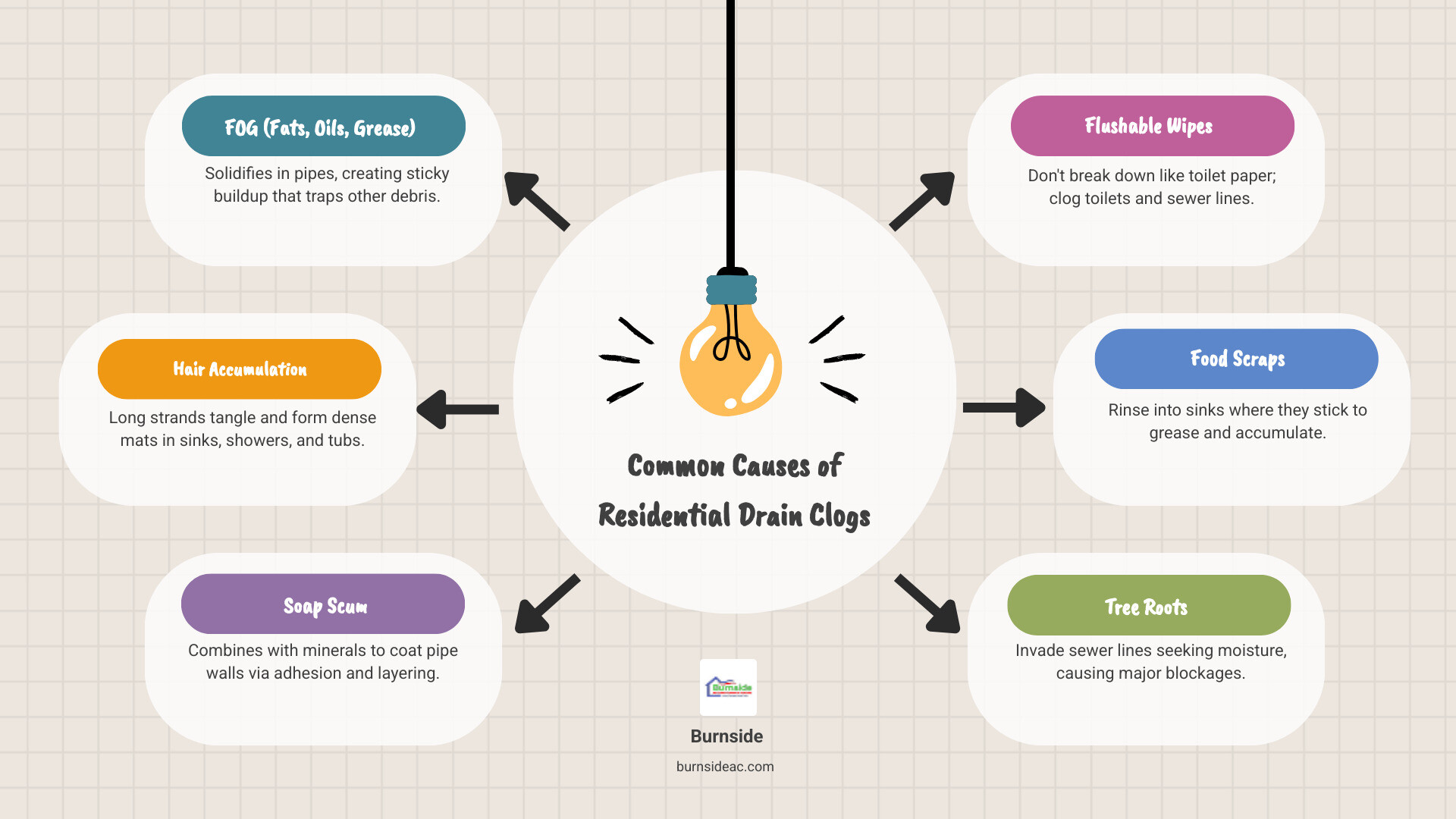
Before we can dive into the solutions, we need to understand the enemy. In our years of serving North Texas, we’ve seen just about everything stuck in a pipe. Most clogs are caused by a process called adhesion and layering. This is where a sticky substance (like grease or soap scum) coats the inside of the pipe, and then solid debris (like hair or food) gets caught in that "glue," building up layer by layer.
The most common culprits include:
- FOG (Fats, Oils, and Grease): This is the leading cause of kitchen clogs. Even if it’s liquid when you pour it down, it cools and solidifies into a waxy sludge inside your pipes.
- Hair Accumulation: A single shower drain can accumulate enough hair to cause a partial obstruction within just 30 to 60 days in a multi-person household without a screen.
- Soap Scum: When soap minerals react with the calcium and magnesium in our local hard water, they form a stubborn, chalky film that narrows the pipe's diameter.
- Flushable Wipes: Despite the labels, these do not break down like toilet paper. They often snag on imperfections in the pipe and lead to a major Sewer Drain Backup.
- Tree Roots: In older neighborhoods in McKinney or Frisco, tree roots can find tiny cracks in sewer lines. Once inside, they feast on the water and nutrients, growing into a massive "root ball" that stops everything.
- Organic Settlement: This includes food scraps and "bio-slime" (bacteria colonies) that thrive in the moist environment of your drains.
How to Prevent Clogged Drains at Home: Kitchen and Dining Tips
The kitchen is the heart of the home, but it’s also the primary battlefield for Plumbing issues. To keep things flowing, the first rule is simple: the sink is not a trash can.
We recommend keeping a "grease jar" under the sink. Instead of rinsing that bacon grease or salad dressing down the drain, pour it into the jar, let it cool, and toss it in the trash. Even small amounts of oil add up over 3-6 months to create a thick layer of FOG.
Pro-Tip: The Weekly FlushOnce a week, pour a gallon of boiling water down your kitchen sink. This helps melt any grease that has started to solidify. For an extra boost, follow it with a half-cup of baking soda and a cup of vinegar. Let it fizz for 15 minutes to scour the pipe walls naturally.
How to prevent clogged drains at home garbage disposals
Many people assume the garbage disposal is a magical portal that makes food disappear. In reality, it’s just a grinder. To prevent clogs here:
- Use Cold Water: Always run cold water while the disposal is on. This keeps any remaining grease in a solid state so the blades can chop it up and flush it away. Hot water melts the grease, allowing it to coat the pipes further down the line.
- The Ice Cube Trick: Drop a few ice cubes down the disposal once a month. The hard ice helps "scrub" the blades. Adding citrus peels (lemon or orange) provides a natural deodorizer.
- Avoid the "Big Three": Never put fibrous foods (celery, corn husks), coffee grounds, or eggshells down the disposal. Fibers wrap around the blades, while grounds and shells create a sediment that acts like quicksand in your traps.
Maintaining proper drain slope and flow
Plumbing isn't just about pipes; it’s about physics. According to the International Plumbing Code (IPC), drain lines 3 inches in diameter or smaller must have a minimum slope of 1/4 inch of fall per linear foot.
If your home has settled—which is common in the expansive clay soils of North Texas—your pipes might lose this "pitch." When that happens, water flows too slowly to carry away solids, leading to frequent backups. If you notice a specific sink that always drains slowly despite being clean, you might need a Sewer Drain Inspection Allen TX to check the integrity and slope of your lines.
Bathroom Strategies to Stop Hair and Soap Scum
Bathroom clogs are almost always a combination of hair and soap scum. Since you can’t exactly stop washing your hair, the best defense is a physical barrier.
Install mesh screens or "hair catchers" in every tub and shower. These inexpensive tools are your first line of defense. We also suggest switching from bar soap to liquid soap. Bar soaps contain fats and talc that contribute heavily to soap scum buildup, whereas liquid soaps are generally more "pipe-friendly."
For routine maintenance, use a "Zip-it" tool—a long, flexible plastic strip with barbs. Inserting this into the drain every few months can pull out hair clumps before they become a massive Sewer Drain issue.
Bio-slime prevention in bathroom sinks
Have you ever noticed a "repugnant slime" in your bathroom sink? This is often bio-slime, a colony of bacteria that feeds on organic matter like toothpaste and mouthwash.
To stop this:
- Change your rinsing habits: After spitting out mouthwash, don't just give the sink a tiny splash of water. Flush it thoroughly with hot water to ensure no organic residue remains in the trap.
- Disinfectant Squirts: A quick squirt of household disinfectant or a small amount of bleach down the drain once a week can kill the bacteria before the slime takes over.
- Enzyme Cleaners: Monthly treatments with enzyme-based cleaners are much safer than harsh chemicals. These enzymes "eat" the organic material, keeping the pipes smooth.
The Impact of Hard Water and Sewer Line Health
Living in Collin County means dealing with hard water. In fact, approximately 85 percent of U.S. households are supplied with hard water.
| Feature | Hard Water Impact | Soft Water Impact |
|---|---|---|
| Mineral Content | High (Calcium/Magnesium) | Low |
| Pipe Scaling | Significant buildup over time | Minimal buildup |
| Soap Interaction | Creates heavy soap scum | Dissolves soap easily |
| Clog Risk | High (narrows pipe diameter) | Low |
Hard water minerals create "scale" inside your pipes. This scale acts like a magnet for hair and grease, accelerating the clogging process. Installing a water softener can drastically reduce mineral scaling and extend the life of your entire plumbing system. If you're unsure about the state of your pipes, a Sewer Drain Inspection Frisco TX can reveal if mineral deposits are narrowing your main lines.
How to prevent clogged drains at home laundry rooms
Laundry drains are often overlooked until they overflow onto the floor. The main culprit here is lint. Most washing machines don't have a perfect lint-trapping system, so the debris ends up in your 2-inch drain line.
- Lint Traps: Use a mesh lint trap on the end of your washing machine's discharge hose.
- Detergent Limits: Don't over-use detergent. Excess soap creates "suds locks" and contributes to buildup.
- Floor Drains: If your laundry room has a floor drain, it likely has a "trap" that needs to stay filled with water to block sewer gases. Every few weeks, pour a gallon of water down the floor drain to maintain the "trap seal."
Warning Signs and Professional Maintenance Schedules
How do you know if a clog is looming? Your pipes will usually try to tell you. Listen for gurgling sounds when you run the sink or flush the toilet—this often means air is being trapped by a partial blockage. Foul, "rotten egg" odors are another red flag, indicating that organic matter is rotting in your pipes or that a sewer line issue is developing.
For effective prevention, we recommend:
- Sewer Line Cleaning: Every 18 to 22 months to clear out inevitable buildup.
- Septic Tank Inspection: If you're in a more rural part of Celina or Anna, have your septic tank inspected every 2-3 years.
- Camera Inspections: If you have recurring issues, a Sewer Drain Inspection Melissa TX using a high-definition camera can pinpoint the exact cause, whether it’s a shifted pipe or a stubborn root.
Frequently Asked Questions about Drain Maintenance
Are chemical drain cleaners safe for my pipes?
In short: no. Most store-bought chemical cleaners are highly alkaline and generate heat to dissolve clogs. This heat can soften or damage PVC pipes and corrode older metal pipes. Furthermore, if the cleaner doesn't clear the clog, you're left with a sink full of toxic acid that a plumber eventually has to deal with. We always recommend natural enzyme treatments or mechanical tools (like a plunger or snake) over harsh chemicals.
When should I call a professional for a drain issue?
You should call us if you experience:
- Recurring Clogs: If you're plunging the same sink every week, you haven't cleared the source of the problem.
- Multiple Slow Drains: If the kitchen, bathroom, and laundry are all slow, the issue is likely in your main sewer line.
- Sewage Backups: If water comes up into the bathtub when you flush the toilet, stop using water immediately and call a pro.
- Tree Root Intrusion: These cannot be cleared with a plunger; they require professional hydro-jetting or mechanical cutting. If you're in Prosper, we can help with a Sewer Drain Backup Prosper TX.
What items should never be flushed down the toilet?
Your toilet is designed for two things: human waste and toilet paper. That’s it. Even though toilet drains are usually 3 inches in diameter (making them more resistant to clogs than sinks), they are easily blocked by:
- "Flushable" wipes (they don't disperse in water)
- Feminine hygiene products
- Paper towels and napkins
- Cotton swabs and dental floss
Conclusion
Preventing clogged drains doesn't require a degree in engineering—just a few smart habits and a little consistency. By being mindful of what goes down your pipes and performing simple monthly maintenance, you can save yourself from the stress and expense of a major plumbing emergency.
At Burnside Air Conditioning & Heating & Plumbing, we’ve been the "Gold Star Standard" for service in McKinney and Collin County since 1958. As a family-owned business, we treat your home like our own, prioritizing accurate diagnostics and expert solutions. Whether you need a routine Sewer Drain Backup service or a comprehensive camera inspection, our team is here to help.
If your drains are acting up or it's been a while since your last professional maintenance, don't wait for a flood. Give us a call today and let us keep your home running smoothly!
Other Blog Posts
Latest Blogs


Customer Testimonial
Hear What Our Customers Say About Their Burnside Experience


I usually don’t leave reviews but Burnside AC really impressed me both times I’ve used them. They were honest and affordable, and they worked around my schedule without any problem. Every technician I met was pleasant, professional, and willing to go above and beyond to make sure everything was done right. It’s rare to find a company you can truly trust, and I highly recommend them.
Jason was excellent. Extremely knowledgeable and very professional. I am really happy with the service he provided, as well as conversing with him personally. I highly recommend him and Burnside. Will definitely be referring Jason and Burnside to family and friends in need of service. Thanks again, Jason!
Thank you Burnside for your great customer service and excellent maintenance team! H.B. completed our fall checkup today in a timely manner and was very friendly and professional. Appreciate you all!
"We have used Burnside for nearly 30 years. They have always been prompt, polite, and professional. Our latest request was a disconnect. You can be sure Burnside's phone will ring as soon as new service is required!"
"I am so impressed with Burnside!!! I will never even consider using anyone else. I was u def a lot of pressure and the heating system was not working correctly and they found a minor inexpensive solution. Another local vendor charged way more for a similar situation. I immediately sighed up for their annual program. God bless them."
"I had Burnside install a new A/C system a few years ago. They did a great job and have returned on a few occasions to perform maintenance. Their technicians are well trained, knowledgeable and courteous. I would highly recommend them for your A/C and heating needs!"
"This crew who installed both of our HCAC units were very good. They worked hard for over 8 hours so we did not have to worry about getting uncomfortable with both units down. Would recommend Burnside to family and friends."
"Excellent inspection and service by Jacob McCormick. He was very efficient, personable and professional. We would like to request him for our future inspections. A first class job!"
"I cannot praise Tim enough for coming to our rescue! We were having issues with rooms over heating and getting too cold, and he was at our house with quickness to resolve the issue!"
.webp)